
This category introduces fallacies: patterns of faulty reasoning, along with the psychological tendencies and cognitive biases that produce them.
Put simply, fallacies are the pitfalls of rational thinking. Because of our biological makeup and the influence of our culture, we reason incorrectly at an unconscious level. When a particular way of going wrong is observed often enough to earn a name, we call it a fallacy. By learning the major fallacies and thinking through their causes and countermeasures, we can reduce our chances of falling into these pitfalls.
Note that this category does not explain how to think correctly. Treat it as a supplement to the following category.


Let’s begin.
toc
Fallacies of Irrelevance
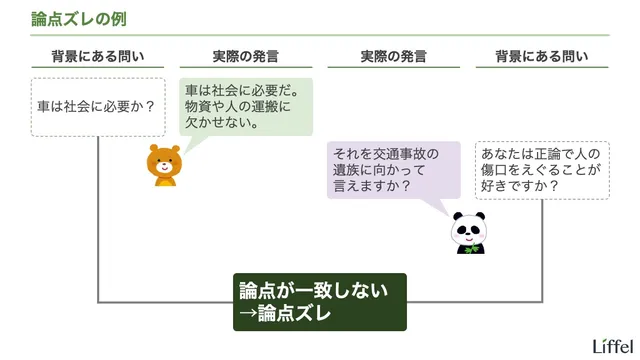
To begin with, arguing about something unrelated to the question is wrong.
Strictly speaking, this is less a matter of being wrong than of being pointless: the thinking does not move forward. No correct answer can emerge from a discussion of things that have no bearing on the question.
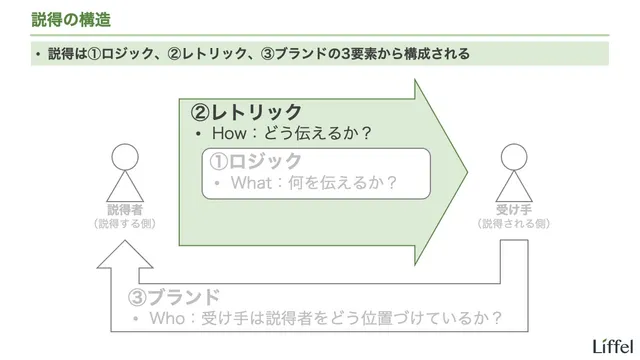
The trouble is that judging whether something is actually relevant is harder than it sounds. Things that are strictly irrelevant to the question can feel relevant to us psychologically or instinctively. The two most common examples are:
- The speaker’s character or background
- The manner of delivery
In this section, we will study fallacies that involve this kind of irrelevance.

Fallacies of “I Am Right”
Next come fallacies of self-certainty.
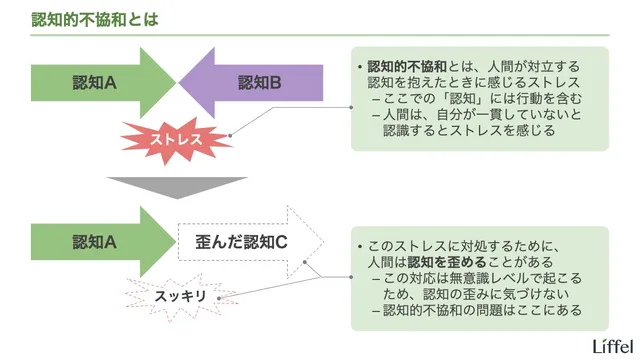
If we want to think correctly, we have to be willing to doubt ourselves; unfortunately, humans are not good at this. At an instinctive level, we are wired to believe that we are right.
In this section, we will study the psychological tendencies, or cognitive biases, behind this disposition.


(The remaining sections are in progress.)