Critical thinking is the basic “way of thinking” and “way of discussing” you use when searching for the answer to a question that has no correct answer1.
Critical thinking is now firmly established as an essential skill for working adults. If you’re a college student starting your job search or someone new to the workforce, you’ll hear the term “critical thinking” sooner or later. There are even cram schools that teach critical thinking to elementary school students.
This page brings together all the knowledge and exercises you need to master critical thinking. Since the detailed explanations are in the linked entries, use this page as a map to grasp the overall picture.
As a rule, I recommend reading the entries in order from the top. They’re arranged starting with what’s most important and easiest to understand.
Even if you already have experience with critical thinking, please still read from the top. Critical thinking is a cumulative skill like math, so if your definitions of terms differ, you won’t be able to follow the content. Feel free to skim what you already know.
Once you understand what’s explained here and work through the exercises, you’ll be at the starting line for any job that requires “thinking.”
Even if you’re in middle school or high school, give it a try. Critical thinking applies to everything from daily life to writing papers (including essays). The sooner you start studying, the better.
Let’s begin.
toc
- Part 1: Introduction
- Part 2: The Basics of Critical Thinking | What Does “Right” Mean?
- Part 3: Critical Thinking in Practice | What Does It Mean to Think “Rightly”?
Part 1: Introduction
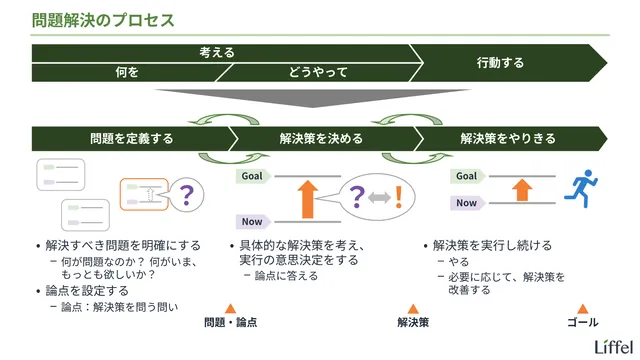
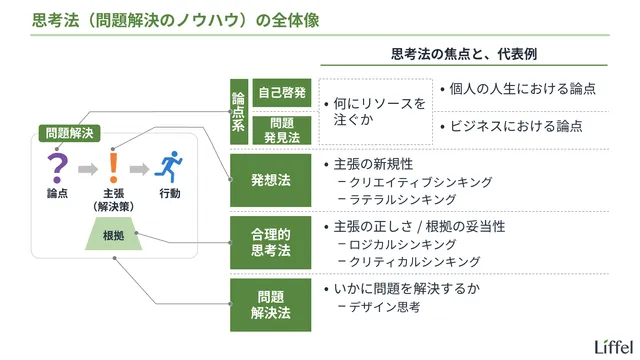
First, let’s get an overview of what kind of skill critical thinking is, why you should learn it, and how to learn it. Also, since critical thinking is a skill used in the context of problem solving, make sure you understand how the two relate.
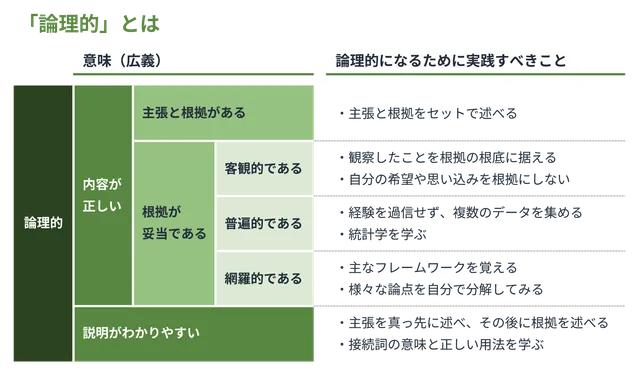

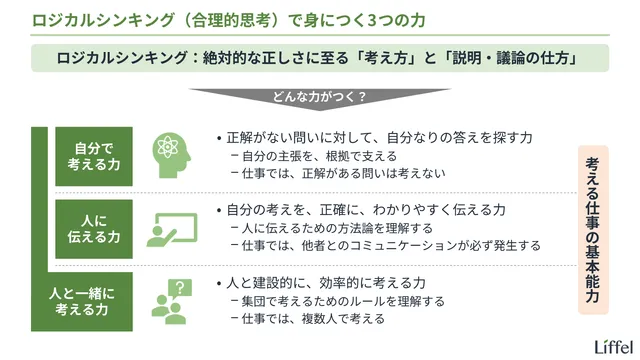
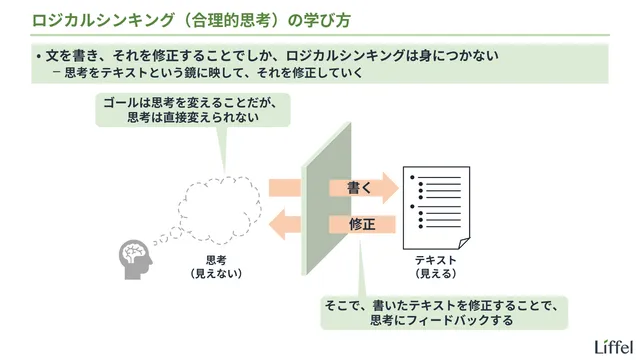

Part 2: The Basics of Critical Thinking | What Does “Right” Mean?
This is where the content begins. In this part, let’s master the basics of critical thinking while learning what it means for something to be “right.”
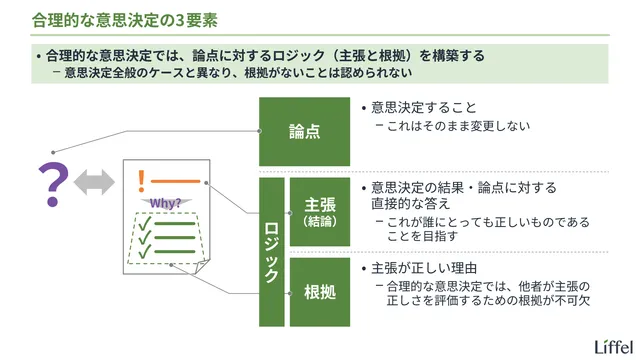
What Is Thinking? The Three Elements of Rational Decision-Making
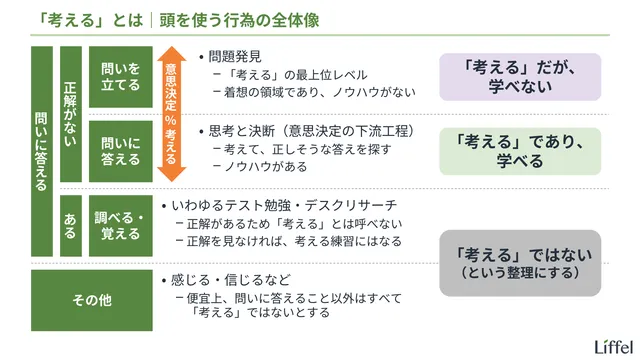
First, let’s make clear what it means to “think.” Since critical thinking is the study of how to think, defining “thinking” is the first step.
In this section, you’ll make the act of thinking concrete while learning the meanings of basic terms in critical thinking, such as “the question” and “premises.”
The Question

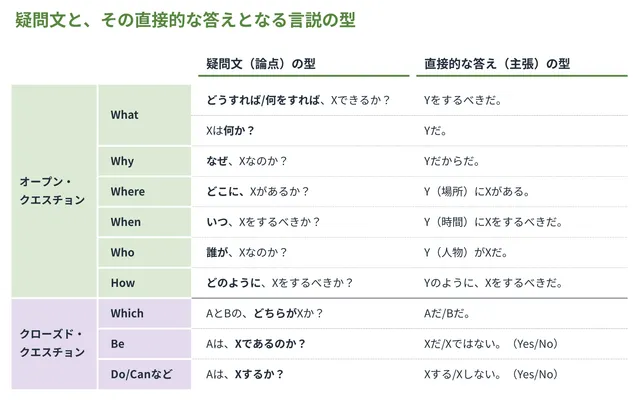
The Argument (Claim and Premises)
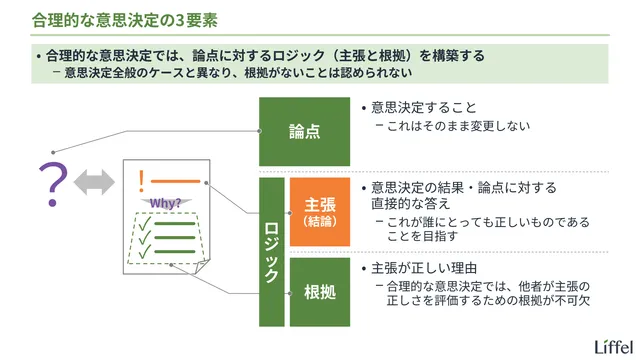
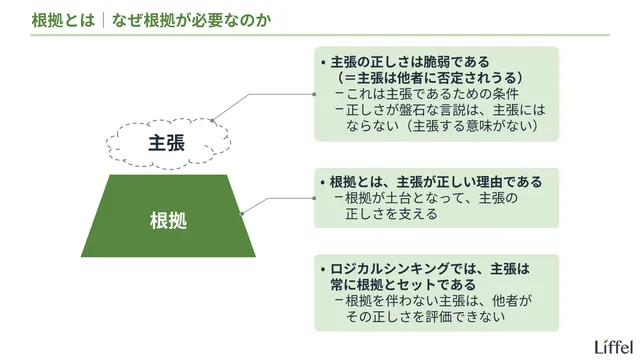
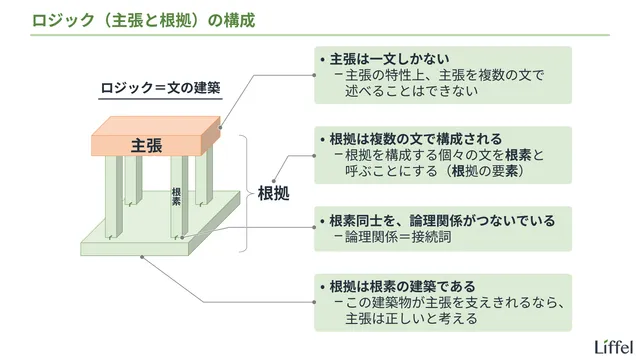
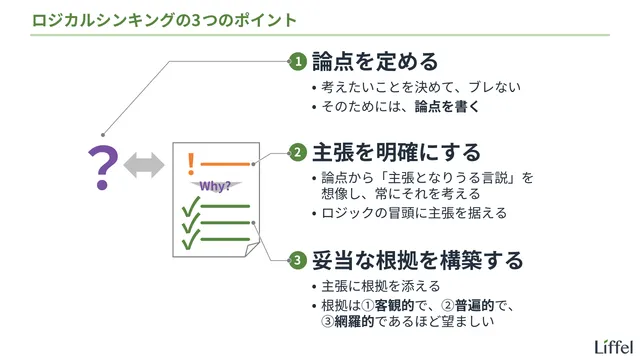
Exercises So Far
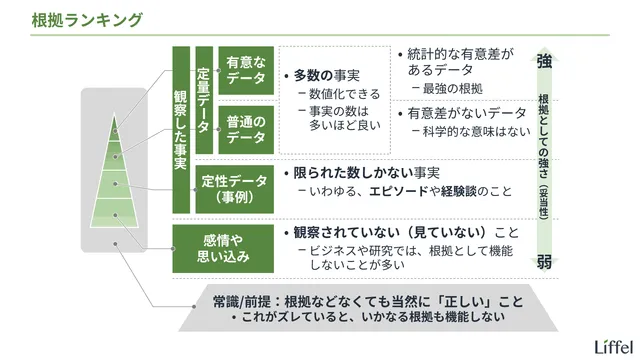
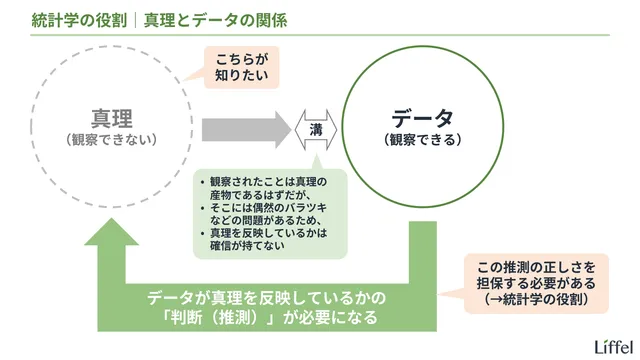
How to Build Valid Premises
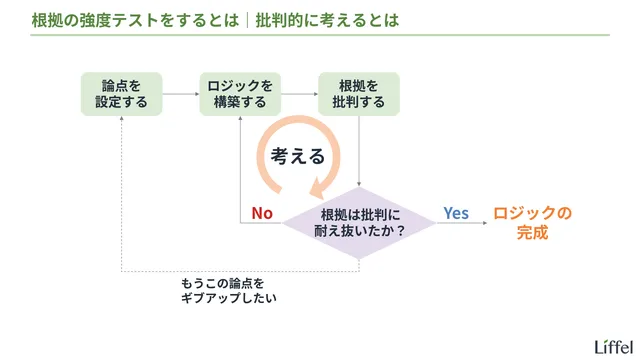
In critical thinking, whether a claim is right is decided by the validity of its premises. You evaluate whether the premises presented are strong enough to support the claim and decide whether to accept the claim on that basis. You don’t judge the claim directly.
From the perspective of the person building the argument, this means when you make a claim, you need valid premises to go with it.
So what are valid premises, and how can you build them? In this section, let’s learn how to build valid premises.
Overview

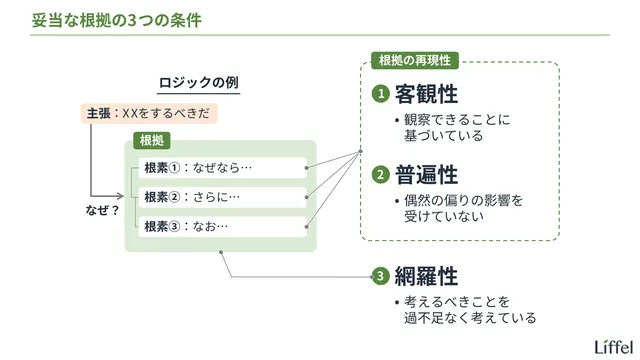
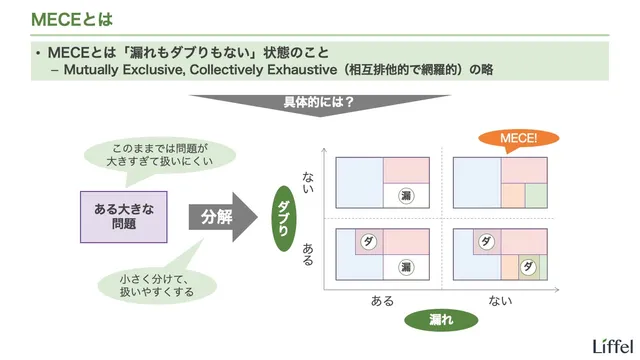
Objectivity, Universality, and Exhaustiveness (MECE)
The three conditions for valid premises are objectivity, universality, and exhaustiveness. Let’s learn each condition concretely.
Part 3: Critical Thinking in Practice | What Does It Mean to Think “Rightly”?
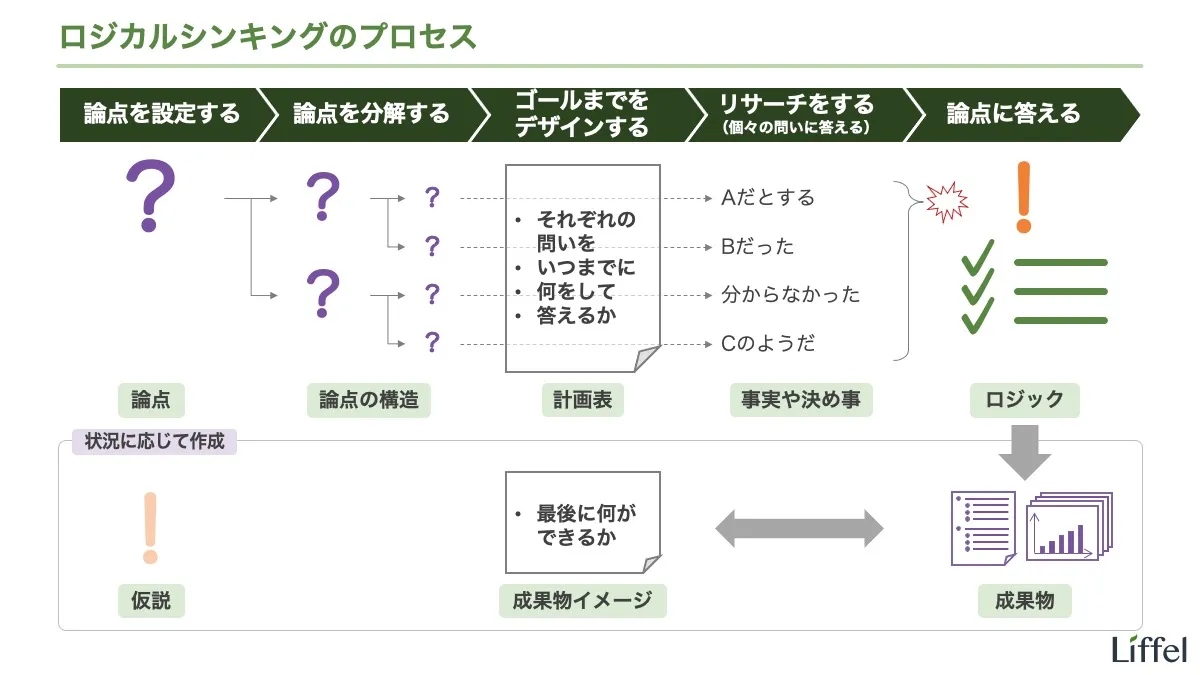
In the previous part, you learned what it means for something to be “right.” From here, let’s learn what it means to think rightly. This is the practical part.
Specifically, you’ll treat everything from setting the question to reaching an answer as a single process and learn what to do and how. Start by grasping the overall picture.
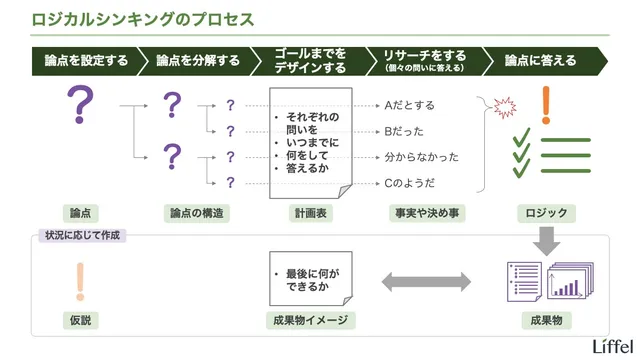
Step 1: Set the Question
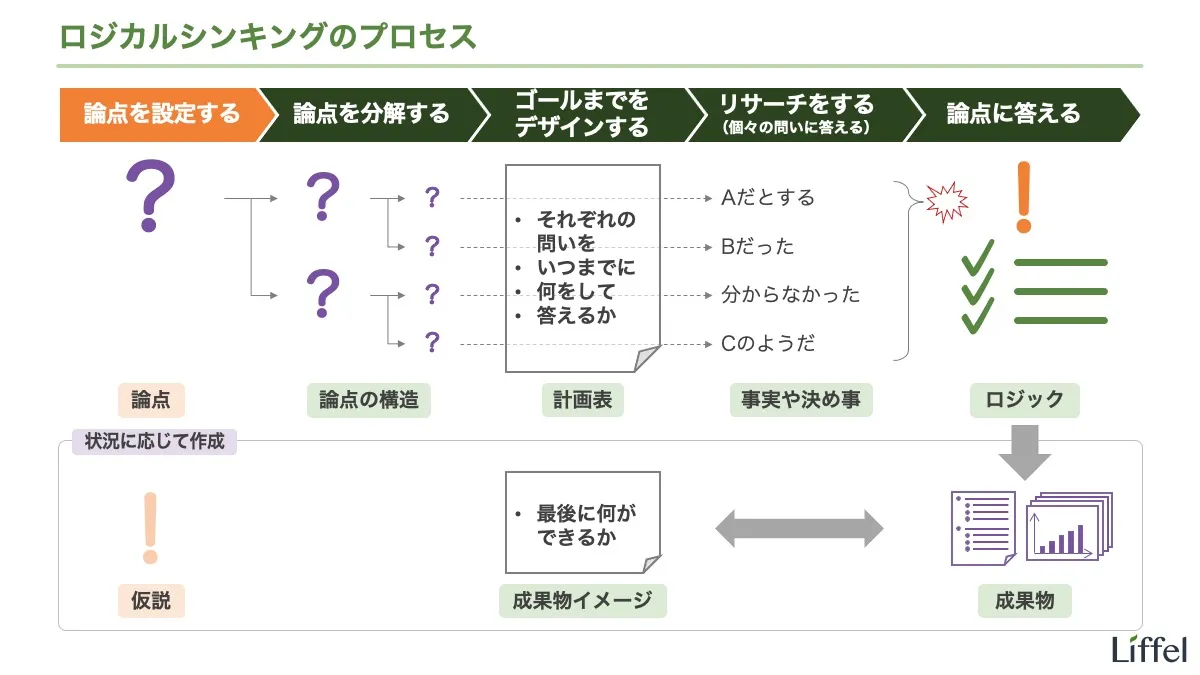
The first step of critical thinking is setting the question. Let’s think about what to do to set the “right” question. Since much of this has no clear answer, it’s difficult, but it’s also vastly important. Please hang in there.
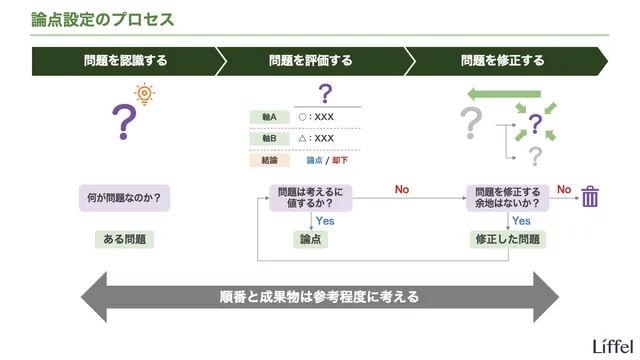
Identifying Questions
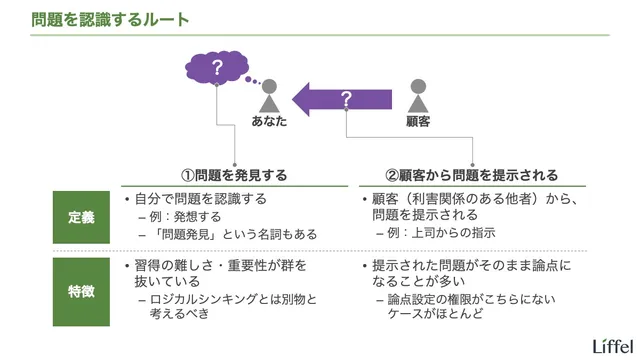
(The rest of this section is in progress.)
Evaluating Questions
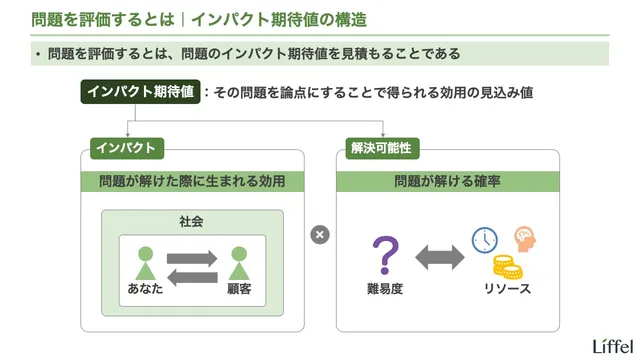
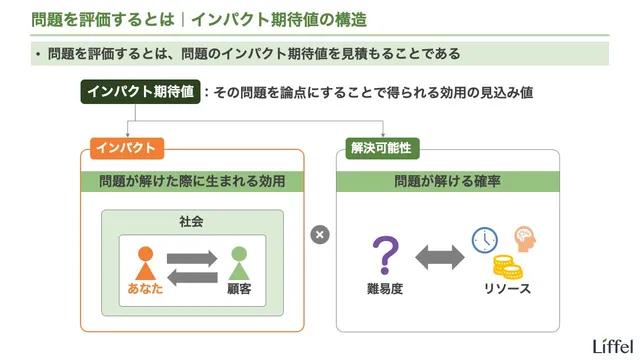
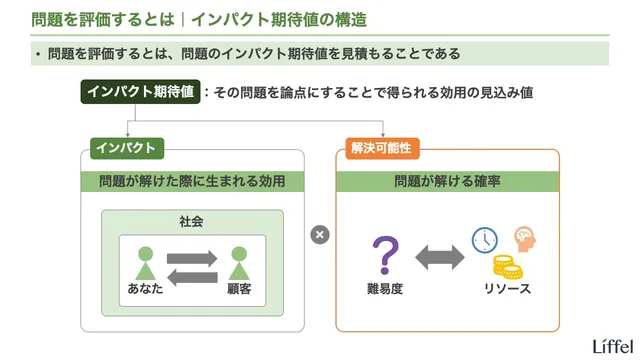
(The rest of this section is in progress.)
Forming Hypotheses
In critical thinking, the earlier you can form a hypothesis (a tentative claim), the better (with some exceptions). Let’s think about what a “hypothesis” is, why you should form one early, and how to form promising hypotheses.
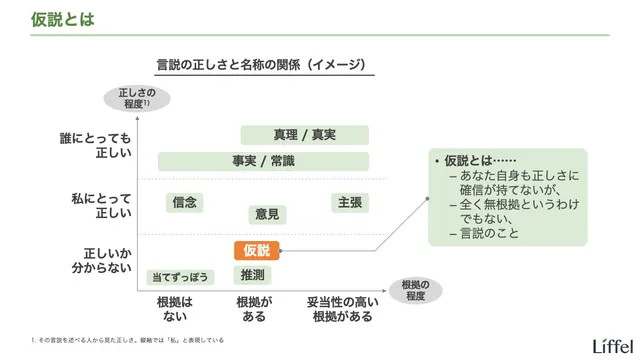
(The rest of this section is in progress.)
Step 2: Break Down the Question
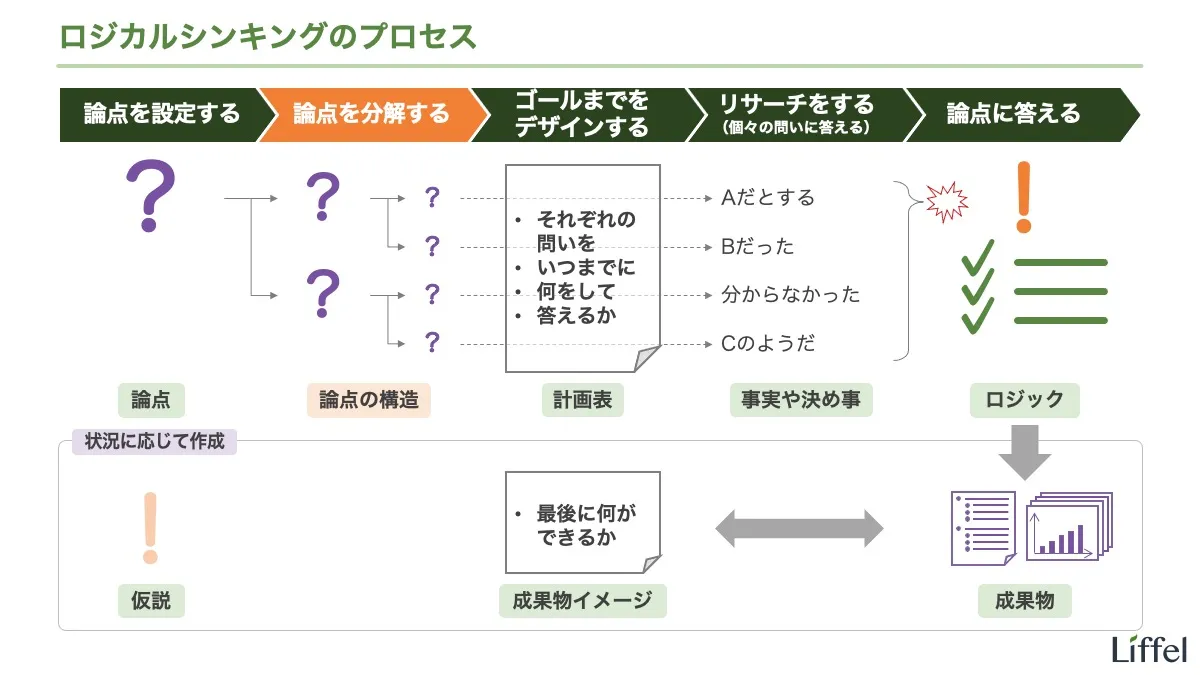
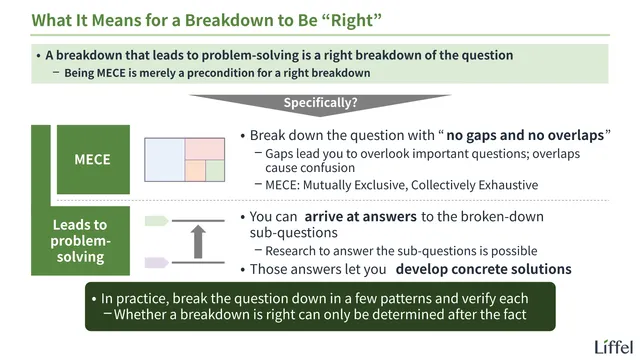
Once you’ve set the question, next you break it down. In this section, you’ll learn what breaking down the question means and master the thinking tools you can use for it.
How to Use Frameworks
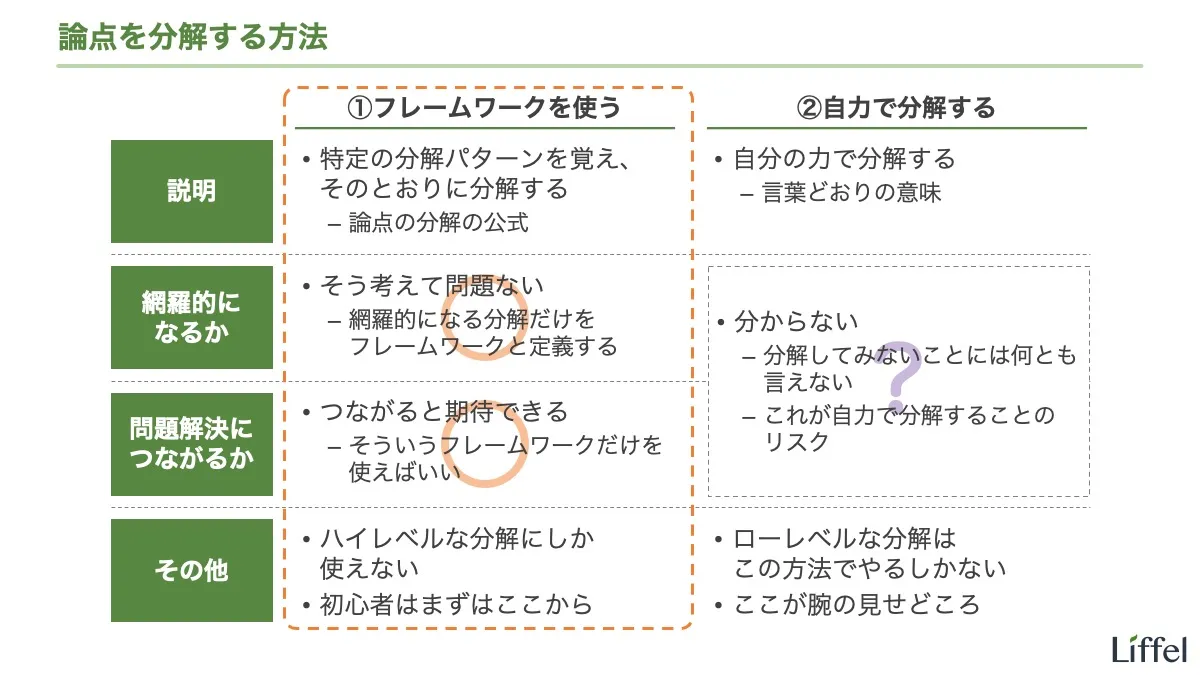
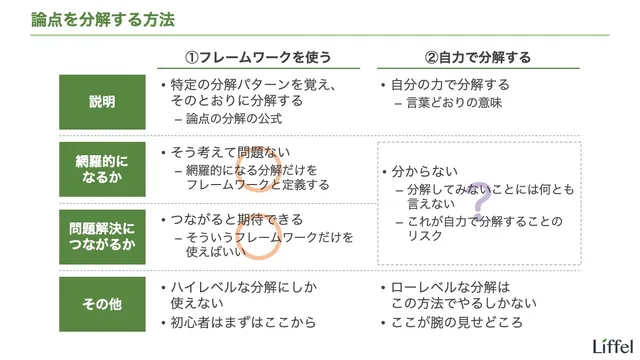
There are broadly two ways to break down the question:
- Use a framework
- Break it down on your own
Of these, frameworks are the easier and quicker to pay off. First, memorize the basic frameworks and actually use them to get comfortable with “breaking down the question the right way.”
Framework Basics
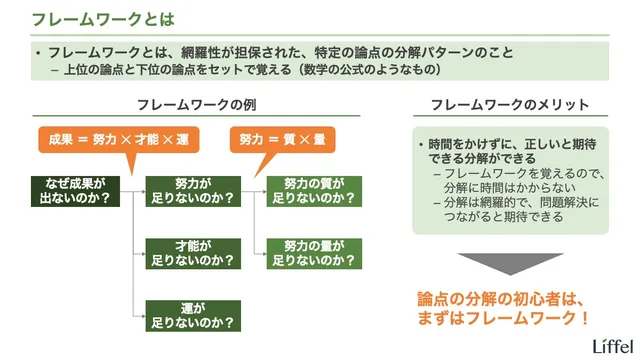
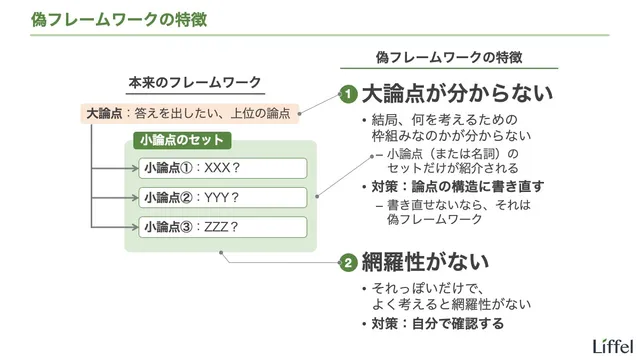
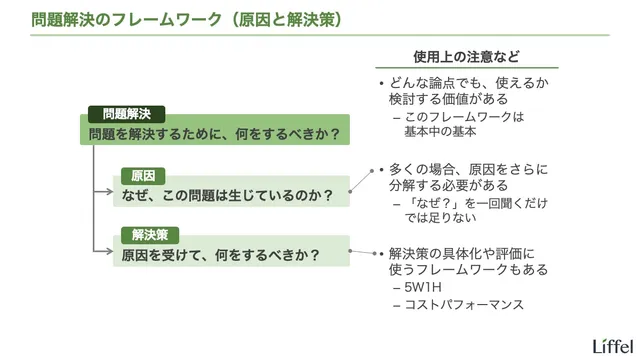
Basic Frameworks
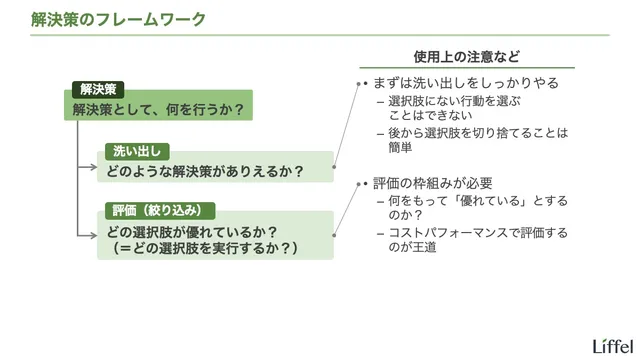
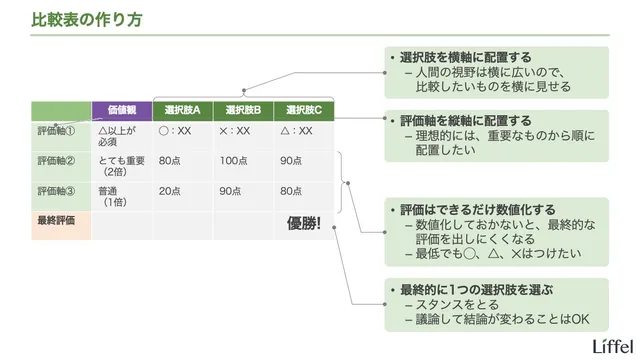
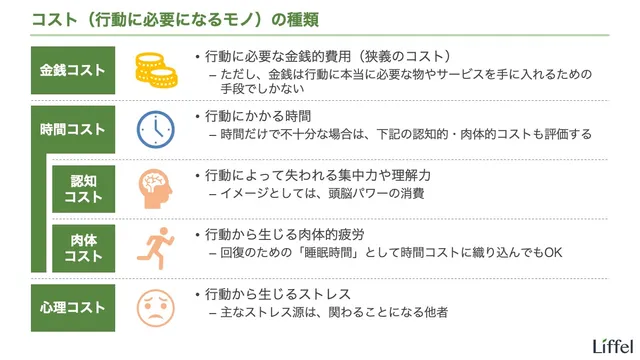
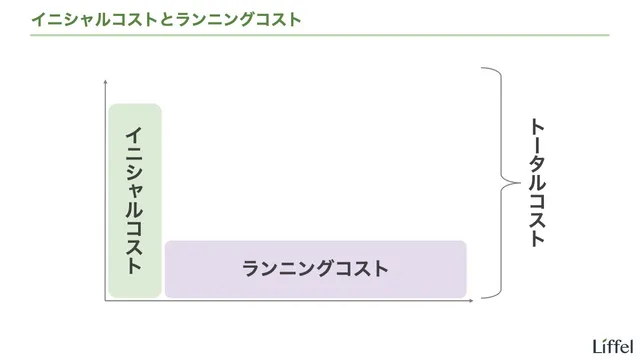
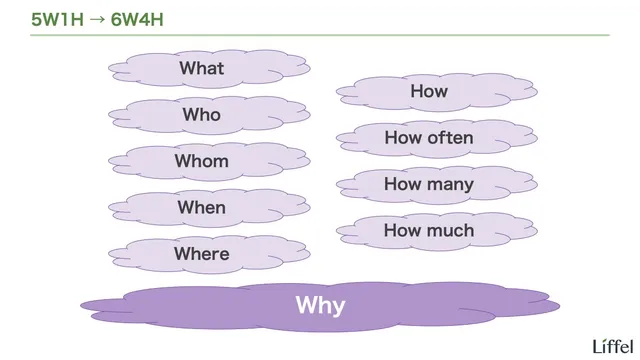
Frameworks for Business
Since there are now so many frameworks for business, they’re introduced in the “Marketing” category below. They aren’t essential for learning critical thinking, so if you’re not involved in business, feel free to move on.
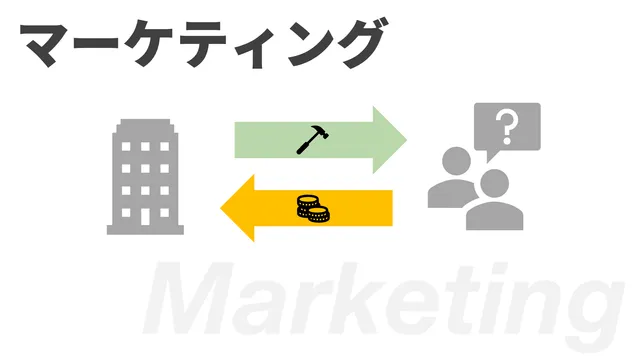
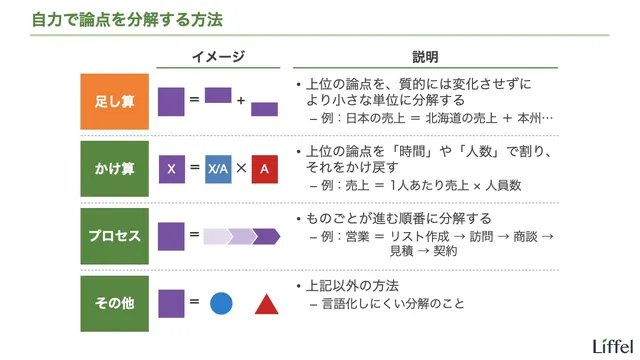
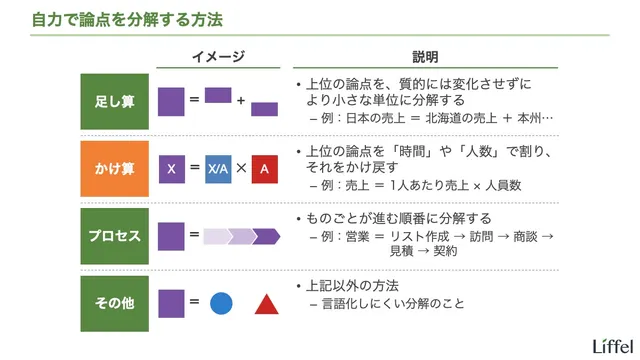
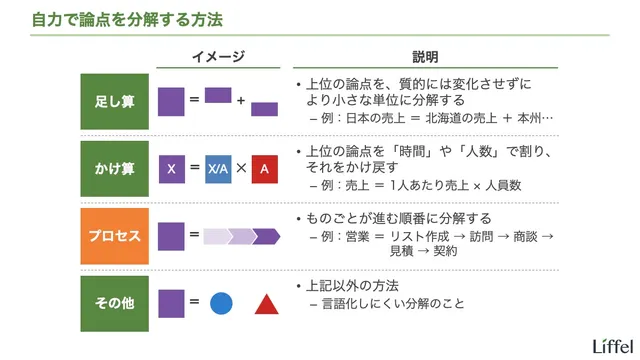
Breaking It Down on Your Own
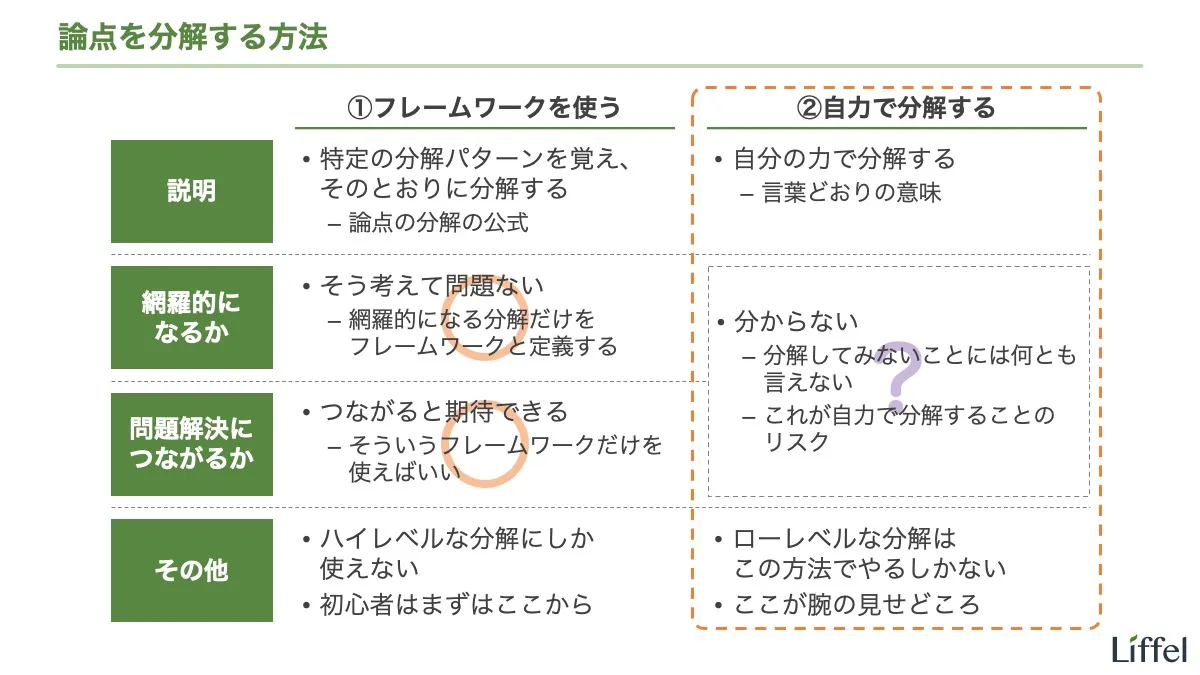
From here, let’s learn the second way to break down the question: breaking it down on your own.
Although frameworks are handy, breaking specific questions down to a deep level inevitably requires breaking them down on your own. Learn the angles for breaking things down and how to handle all sorts of questions.
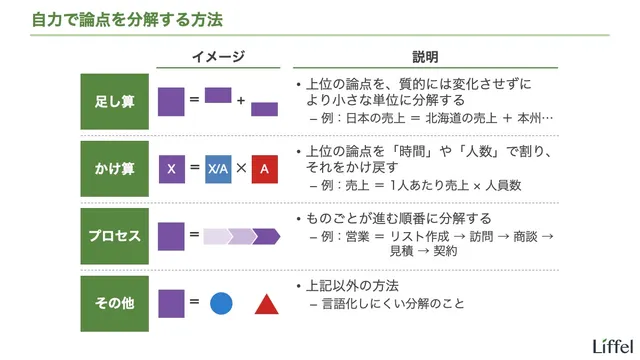

Step 3: Design the Path to the Goal
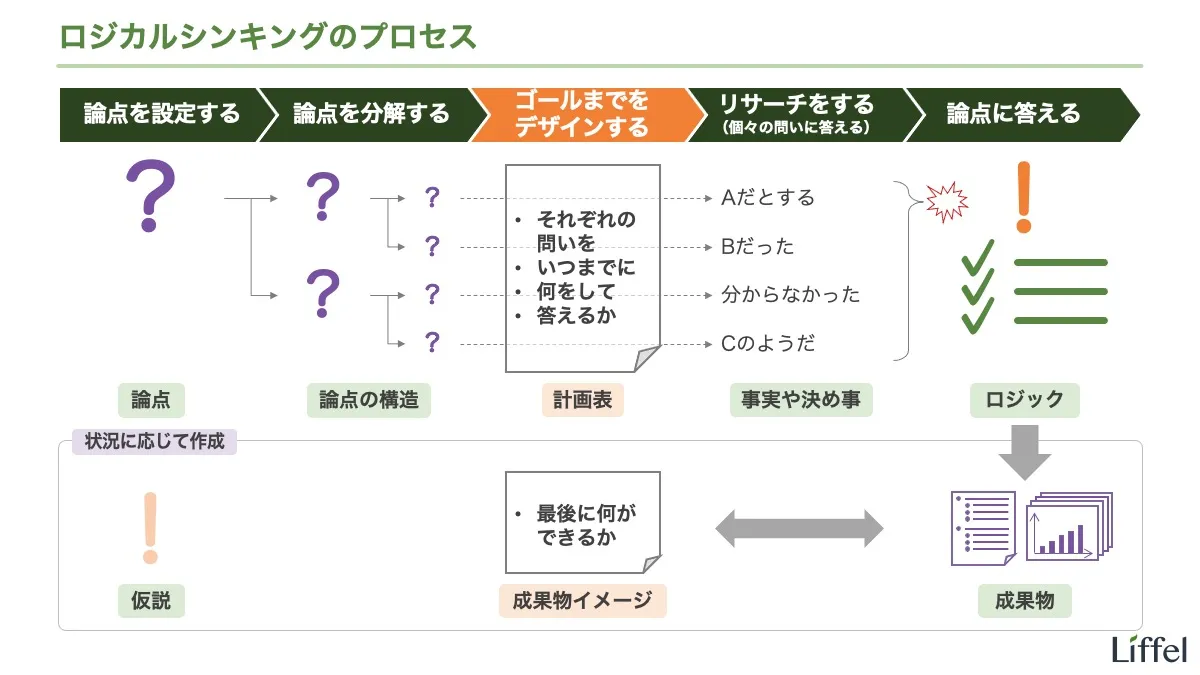
Once you’ve broken down the question, next you design the path to the goal. Instead of jumping straight into research, map out the route to the final deliverable. This section explains specifically how to design the path to the goal.
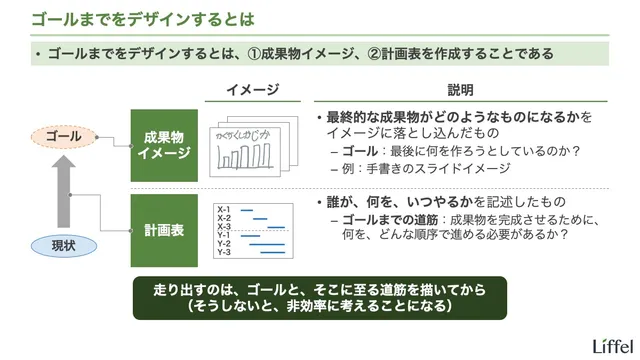
(The rest of this section is in progress.)
Step 4: Do Research
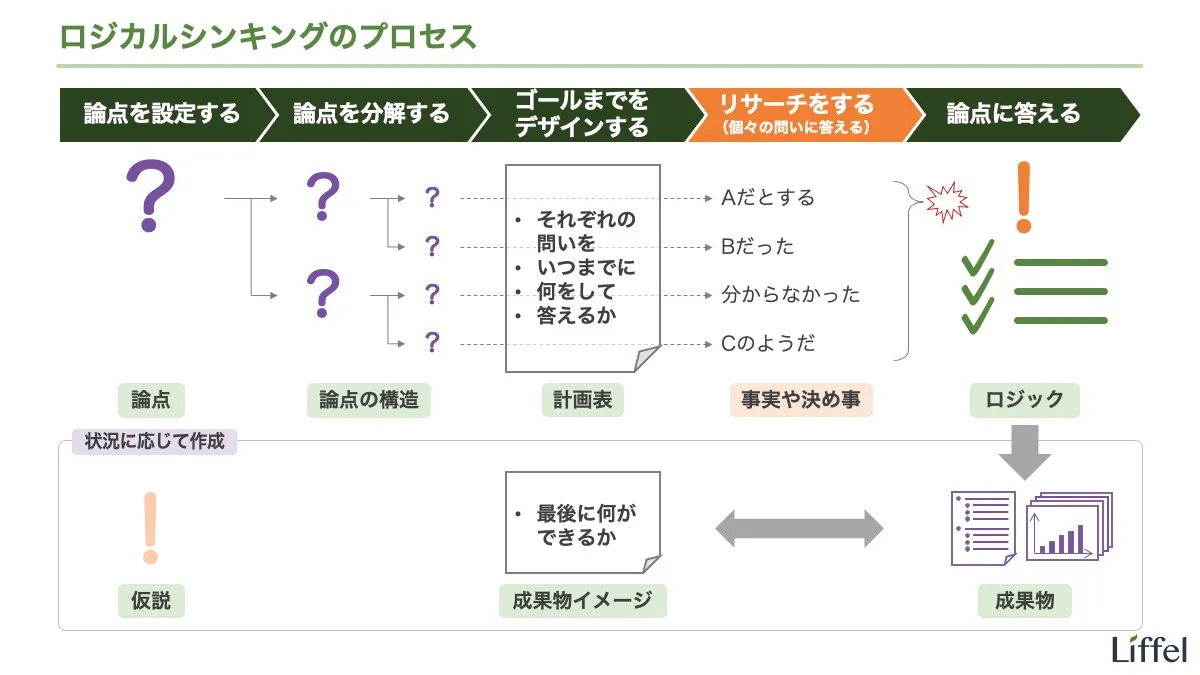
From here, let’s learn how to answer the questions you’ve asked. As a rule, you do research, but some types of questions can’t be answered through research. Let’s start with that, and then dig into research.
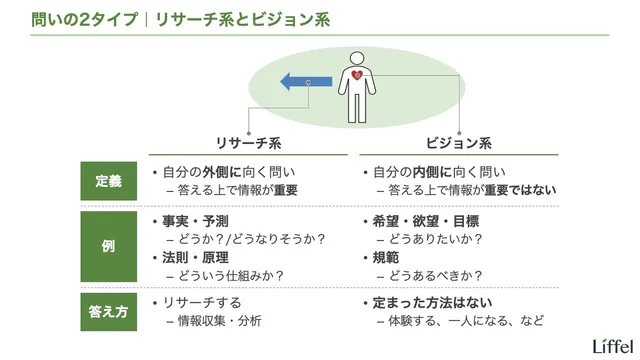
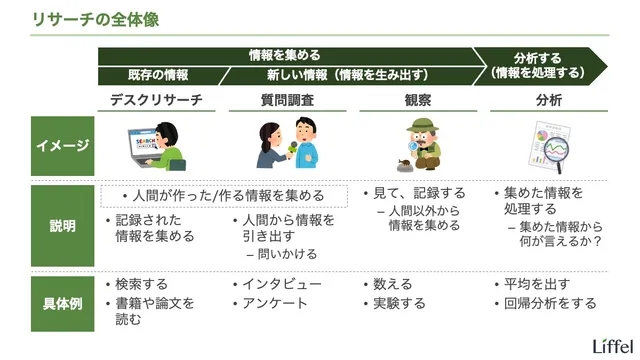
(The rest is in progress.)
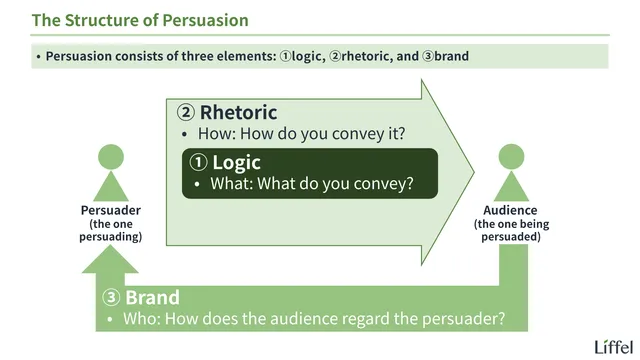
Extra: The Structure of Persuasion
What does it take for others to accept the conclusions you reach through critical thinking? This entry explains the structure of persuasion.
Footnotes
-
This site treats “critical thinking” as something different from “logical reasoning” in the strict sense (a way of thinking in which inferences are valid assuming the given premises are true). ↩